
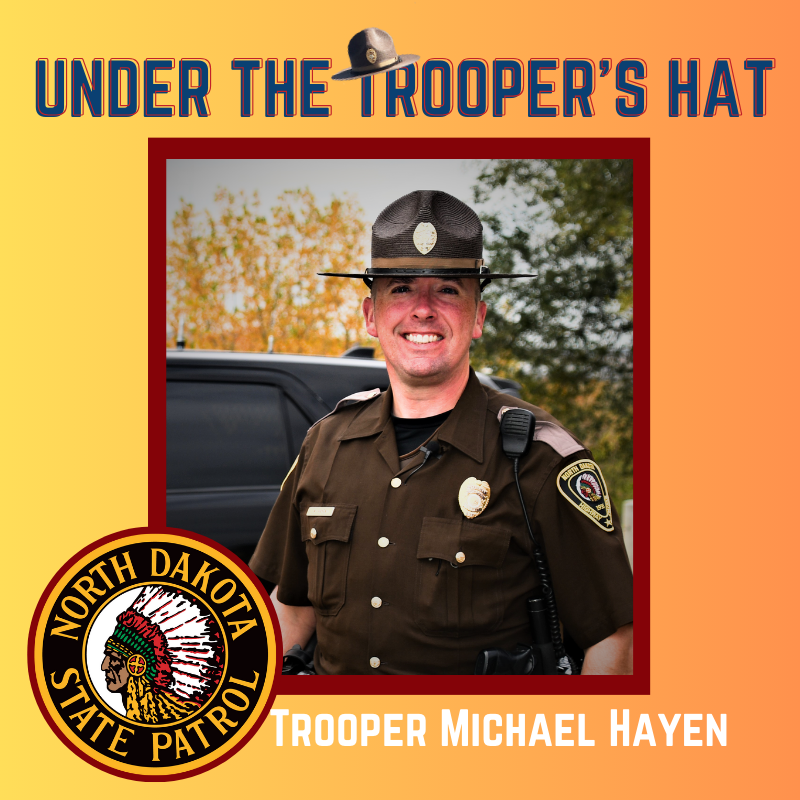
Under the Trooper's Hat-Side of the Road
By Trooper Michael Hayen
If you’ve ever passed a state trooper parked in the median, on the shoulder, or along an approach and thought, “What are they up to?” — you’re not alone. Is the trooper running radar? Waiting for a call? Taking a break? The honest answer is yes… sometimes. And often, it’s much more than that.
For most troopers, the patrol car is not just a vehicle; it is their office. Unlike most professions, troopers do not have a desk to work from. Reports, emails, phone calls, case documentation, crash narratives, and court paperwork are usually completed from inside the squad car. When you see a trooper parked along the roadway, they may be writing a detailed crash report; documenting an arrest; completing a citation; responding to emails; or entering the information required by law before moving on to the next call.
Sometimes, troopers are participating in high-visibility patrols. Simply being seen matters. Numerous traffic safety studies have shown that the visible presence of law enforcement on the roadside reduces speeding, aggressive driving, and crashes. When drivers see a marked patrol vehicle, speeds drop, phones disappear, seatbelts click, and drivers’ attention levels rise almost instantly. A trooper sitting stationary can often prevent violations and collisions without ever activating their emergency lights.
Troopers may also be monitoring traffic for something very specific such as watching for a stolen vehicle; a wanted person; or a vehicle connected to a recent crime. Modern law enforcement relies on awareness and observation, and positioning a patrol vehicle in a strategic location can be critical to identifying a suspect vehicle before it disappears.
Another important — and often overlooked — reason troopers may pull over is for safety and mental well-being. Law enforcement officers routinely deal with high-stress and sometimes traumatic situations: serious crashes, injuries, fatalities, domestic disputes, and crimes involving individuals at their worst moments. Before responding to the next call, a trooper may need a few moments to decompress, regain focus, or mentally process what they have just experienced. Taking a brief pause can be essential to ensuring they are mentally prepared to safely and professionally handle whatever comes next.
Of course, troopers may also be assisting a stranded motorist, coordinating with other emergency responders, or positioning themselves to respond quickly to calls for service. Every stop on the roadside has a purpose, even if that purpose isn’t immediately obvious to passing motorists.
So the next time you see a state trooper parked along the highway, remember they may be working, watching, preventing a crash, writing reports, looking for a dangerous offender, or taking an essential moment to reset before protecting the public once again. Their presence alone often makes the road safer — even if it appears like nothing is happening at all.
The mission of the North Dakota Highway Patrol is to make a difference every day by providing high-quality law enforcement services to keep North Dakota safe and secure. NDHP invites you to visit the FAQ section of the website: www.nd.gov/ndhp; like our Facebook page www.facebook.com/northdakotahighwaypatrol; or join us on Instagram, www.instagram.com/ndhighwaypatrol, to learn more about traffic safety, get tips, and read NDHP news. Previous Under the Troopers Hat articles can be found at www.nd.gov/ndhp/safety-and-education/under-troopers-hat.